The Cultural Land Trust (CLT) acquires and manages property through the community-ownership model of a Land Trust for the benefit of arts and culture communities across B.C.
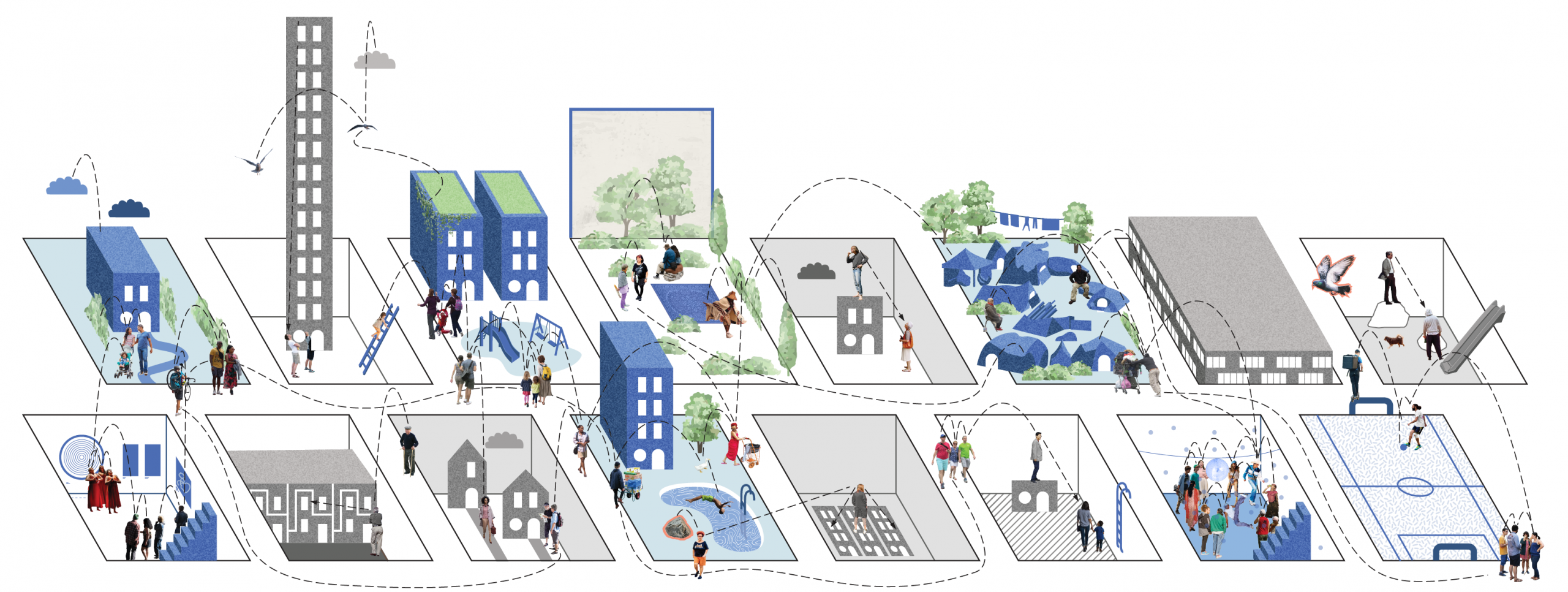
As a non-profit real estate model, the CLT opens pathways toward sustainable stewardship of cultural spaces, generating rent stability and collective wealth for artists and cultural organizations–especially low-income, disabled, LGBTQ2IA+ and BIPOC.
Vision
-
Re-commoning Property
Reimagine property from exclusionary, individualistic ownership to inclusive, collective responsibility.
-
Cultural Space Access
Promote affordable, secure, long-term access to cultural space by removing properties from the for-profit/speculative real estate market.
-
Land First
Uncolonize property ownership by viewing property as land first–prioritizing our relationship and responsibilities to the land, local communities, and First Nations on whose territories the CLT operates.
-
Rights Recognition & Reciprocity
Recognize and support Indigenous rights to self-determination and sovereignty through partnerships and collaboration with First Nations and Indigenous communities, conceptualizing land back through innovative ownership modelling and resource sharing.
-
Equity & Inclusion
Advance equity by meaningfully including Indigenous, Black, and other artists of colour in collectively deciding how the trust’s resources are used and managed; actualizing governance that genuinely reflects arts and culture communities.
-
A Long-Term Solution
Leverage the collective strength of the arts sector to advocate for sustainable infrastructure, investment, and regulatory alignment.
How it works
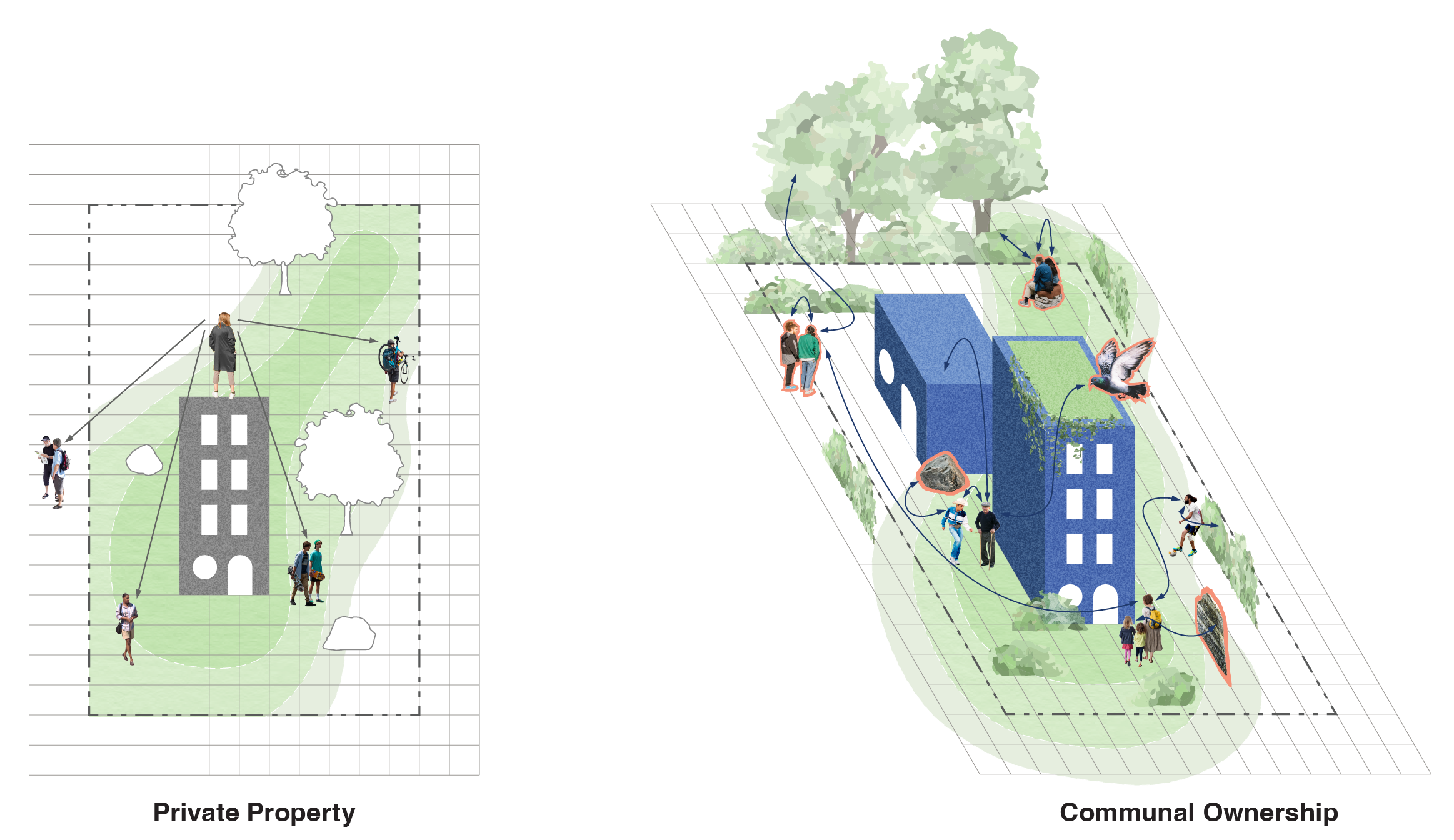
How Land Trusts Enable Community Ownership
- Land trusts are mission-driven organizations that steward land in perpetuity for community benefit. Through communal ownership, land trusts separate land ownership from speculation and for-profit development.
- Land Trusts function as non-profit societies, which means the land is owned by the society rather than by one individual. Most land trusts operate as membership-based organizations accountable to the communities they serve.
- The first community land trust was established in 1969 in Albany, Georgia, during the Civil Rights movement. Responding to white landowners evicting Black tenant farmers for registering to vote and participating in civil rights activism, New Communities Inc. was founded to secure land tenure for Black residents.
- Similarly, Chinese Benevolent Associations were established in the late 19th and early 20th centuries as a direct response to systemic racial discrimination. They have long functioned like land trusts, pooling resources and holding land for the collective good, providing kinship and essential support to members based on shared ancestry, origin, or interests.
How Governance Works
- As non-profit societies, land trusts are governed by members, a Board of Directors, and bylaws. This structure offers individuals and organizations pathways to participate in their local land trust.
- Land trust governance is rooted in community involvement. People become involved by joining as members. Members can nominate and vote for members to serve on the Board of Directors. The Board then manages the organization’s assets and resources for the benefit of the community it serves.
- Membership and board representation are intended to reflect the community the land trust serves, with shared, balanced decision-making that ensures diverse perspectives are heard.
- The Cultural Land Trust is developing its governance model, a process in which the voices of arts and culture communities are critical. While planning is underway, the CLT expects tenants, artists, arts organizations, and rights holders to be represented in its membership, to shape an independent board that reflects wider art communities.

How it’s funded
- Since 2018, the Cultural Land Trust (CLT) has undergone significant research to assess the feasibility of the land trust as a solution to the cultural space crisis. Its funding model is designed to be self-sustaining and to grow over time.
- To begin, the CLT receives funds and buildings from government and philanthropic sources, combining grants, municipal rezonings, and philanthropic support to create a stronger, more accountable investment opportunity that supports artists and cultural organizations.
- The CLT then finances, acquires, and/or develops buildings for cultural use. Over time, the value created is reinvested to expand the CLT and support arts and culture communities across British Columbia.
Our story
221A is the fiscal sponsor of the Cultural Land Trust (CLT), supporting the research, planning, and startup phases of the CLT. 221A is a non-profit operator of housing, workspaces, and cultural facilities on the unceded Indigenous territories belonging to the xʷməθkʷəy̓əm, Sḵwx̱wú7mesh, and səlilwətaɬ Nations. 221A envisions a pluralistic society in which all people have the means to access and make culture. The CLT is envisioned as an entity separate and independent from 221A, with its own board of directors.
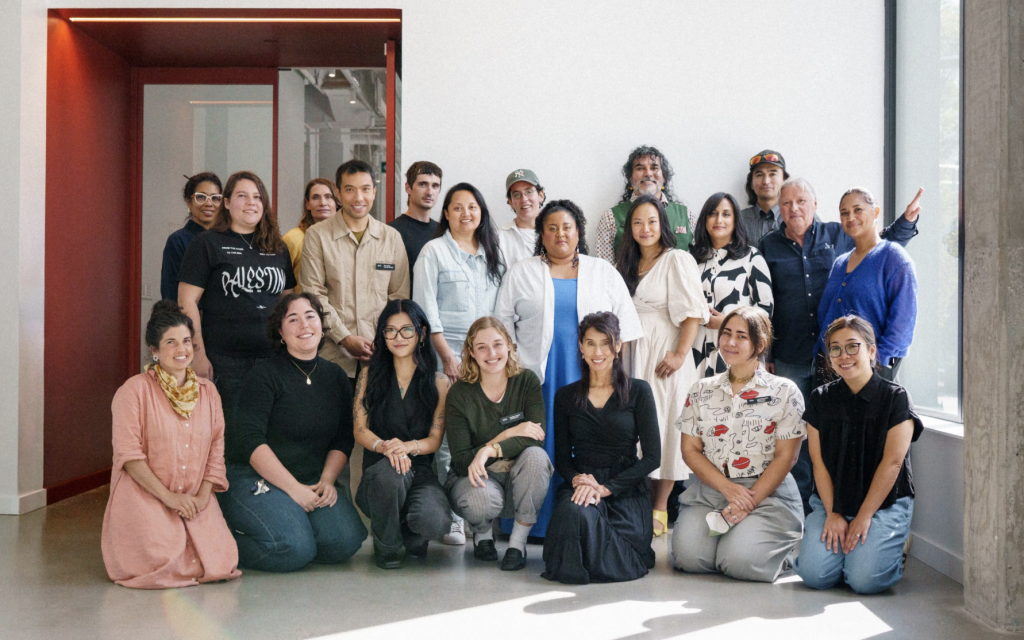
In fall 2017, 221A’s Board of Directors and senior staff participated in an annual Board Retreat that signalled a desire to shift its existing services away from 10-15-year leasehold arrangements towards a deeper, more collective form of security of tenure. Recognizing the concept of a land trust for cultural purposes as a valuable exploration, the board approved a preliminary study of a Cultural Land Trust.
Since then, 221A has served as an administrative partner to the Cultural Land Trust (CLT) and will provide fiscal sponsorship and property services during its startup phase until it reaches governance and operational stability.
Where we’ve been
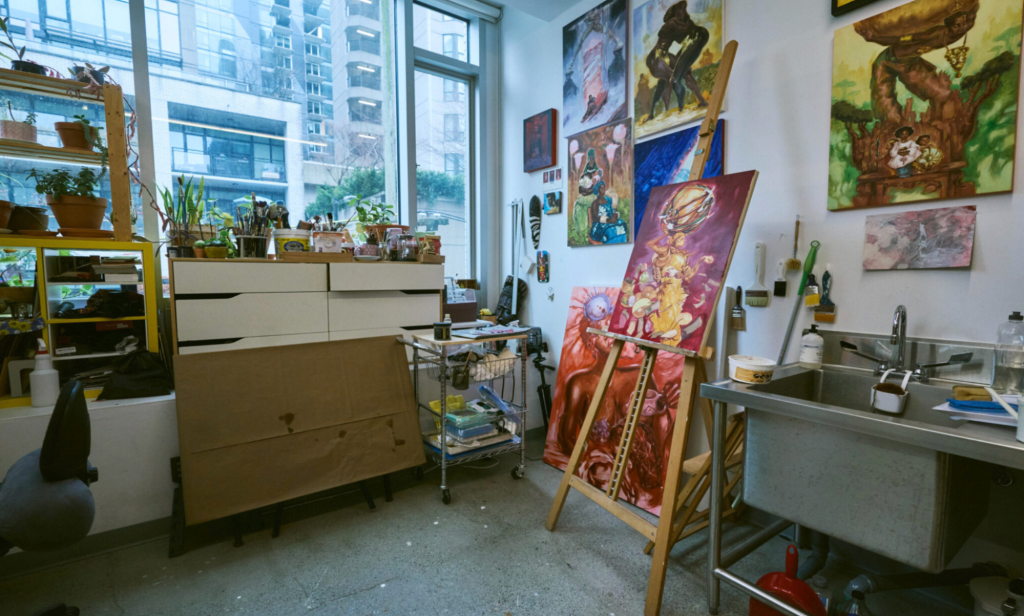
The CLT was created to address space affordability, real estate speculation and regulatory challenges and issues facing the arts and cultural sector in B.C.
-
2017: The Idea Emerged
In response to concerns about the increasing precarity of artists’ material conditions and the closure and displacement of nonprofit arts spaces in a city with escalating real estate pressures, the 221A board approved exploring the Land Trust as a model for sector-wide stability.
-
2019: Preliminary Study
The first stage of 221A ‘s exploration of the land trust, an idea-validation study titled Cultural Land Trust Study: Recommendations for a Model, was completed. The study assessed the cultural sector, reviewed existing research, and analyzed creative land trusts around the world. Importantly, it also found that while 221A is well positioned to provide leadership and fiscal sponsorship in the start-up phase, it is not suited to manage the Cultural Land Trust itself.
-
2019: City of Vancouver Support
Through advocacy efforts and collaboration with former City Councillor Christine Boyle, the Cultural Land Trust was incorporated into the City of Vancouver Arts and Culture Plan, Culture|Shift.
-
2021: the CLT Incorporated as a Non-Profit Society
Following preliminary research and development, the CLT was incorporated as a BIPOC-led, sector-wide non-profit mandated to develop and secure arts and cultural spaces for artists in BC through the ownership and stewardship of cultural facilities, with a focus on communities historically excluded from cultural space.
-
2021: Justice, Equity, Diversity, and Inclusion Report
Alongside research collaborators, the Justice, Equity, Diversity, and Inclusion for a Vancouver Cultural Land Trust study was completed. Based on interviews with founders, senior arts leaders, artists, and cultural workers who identify as Black, Indigenous, and/or People of Colour (BIPOC), the report offers critical insight into how the CLT should be governed, developed, and supported, and how it can do so respectfully and inclusively.
-
2022: Early Business Planning
221A completed the Cultural Land Trust (CLT) Business Plan, a study that demonstrated the CLT’s potential to substantially reduce the risk of displacement for arts and culture organizations and offered high-level recommendations for its structure and operations.
-
2024: City of Vancouver Council Task Force Motion
City of Vancouver Council members unanimously passed the motion “Taking Action to Protect and Expand Arts and Culture Spaces” on May 29, 2024. The motion directed staff to form an interdepartmental working group and report back with recommendations on how the City could support the development of an independent, not-for-profit Cultural Land Trust.
-
2024: Province Whitepaper
221A submitted research to support provincial investment in establishing the Cultural Land Trust. The research recommended funding streams for space acquisition and capital grants to secure cultural spaces at risk of closure or displacement, achieve long-term affordability, and prioritize equity-seeking groups.
-
2024: Launch of the Indigenous Reciprocity Research Initiative (IRRI)
As a new organization shaping its governance and policies, the CLT committed to Indigenous reciprocity as a foundational principle. The Indigenous Reciprocity Research Initiative (IRRI) was crafted to guide this work and ensure Indigenous values and decolonial principles are embedded in the CLT’s projects and development. Building on the JEDI study completed in 2022, this initiative seeks to deepen the dialogue it began and ground a futurity of right relations at the Cultural Land Trust.
-
2025: Financial Reciprocity Research
As part of the Indigenous Reciprocity Research Initiative, the Indigenous Financial Reciprocity Report was completed, exploring methods and offering recommendations for integrating financial and resource-sharing with Host Nations into CLT operations and management.
-
2026: Ownership Modelling Research Published
221A continued research and development for the CLT by testing models and strategies through real-world projects. Three pathways toward ownership or long-term leasehold were explored: the Yee Society, a community co-development model; Woven Island, strategies for decolonizing cultural space use at a large government site; and 825 Pacific, a municipal lease-transfer.
-
2026: First Asset
The first property of the Cultural Land Trust (CLT) was bequeathed by the late SFU professor Dr. Evelyn Pinkerton, who was known for her dedication to environmental advocacy and management. Located near xʷməm̓qʷe
(Camosun Bog), the bequest was made possible through the Co-operative Housing Federation of BC and 221A. It launched the CLT’s first official asset, assessed at $2.77 million in 2025, and provided an invaluable opportunity to begin activating the CLT model and values in practice.
-
2026: Unanimous City Motion to Create a CLT for Vancouver
City of Vancouver Council members unanimously passed the motion “Keep the Artists in: Creating a Cultural Land Trust for Vancouver” on July 15. Submitted by Councillor Sean Orr, the motion formalized municipal support for the CLT after eight years of research. It set in motion the development of a framework for partnership with the city and a portfolio of potential city-owned buildings by March 2027.
What’s next

-
2026: Planning
Community Gathering
Join the CLT for its first public forum on October 9, 2026. See our events page for more details.Governance Planning
Ongoing research and community engagement to shape the CLT’s membership and board structure. Contact us to get involved.Strategy & Policy Development
Continued research into how the CLT will pursue projects and acquisitions in ways that align with our core values and vision. -
2028: Seed
Governance Launch
Formalize an inaugural board and launch membership.Fundraising
Work toward a $15 million start-up fund by 2028.Acquisitions Planning
Advance capital and operations planning to identify initial acquisitions and/or co-development partnerships. -
2030: Operational
Independent Governance
Elect the CLT’s first nominated board members to the Board of Directors.Organizational Capacity
As a fully independent organization, the CLT will hire its own staff and no longer rely on administrative and staff support from 221A.Acquisitions
With seed funding in place, the CLT will begin purchasing properties. -
2050: Self-sustaining
Long Term Goal
The CLT aims to own at least 30 properties by 2050, providing long-term security for small and medium-sized nonprofit arts and culture organizations.